We are excited to inform you that at 4:00АM on Saturday, May 25, 2024 Eastern Daylight Time (EDT) we have migrated our DC2 USA server ( https://coolicehost.com/web-hosting.html ) to a new home datacenter location in Oregon USA. This migration will bring several benefits for our customers, including the use of the next generation Ryzen CPU […]
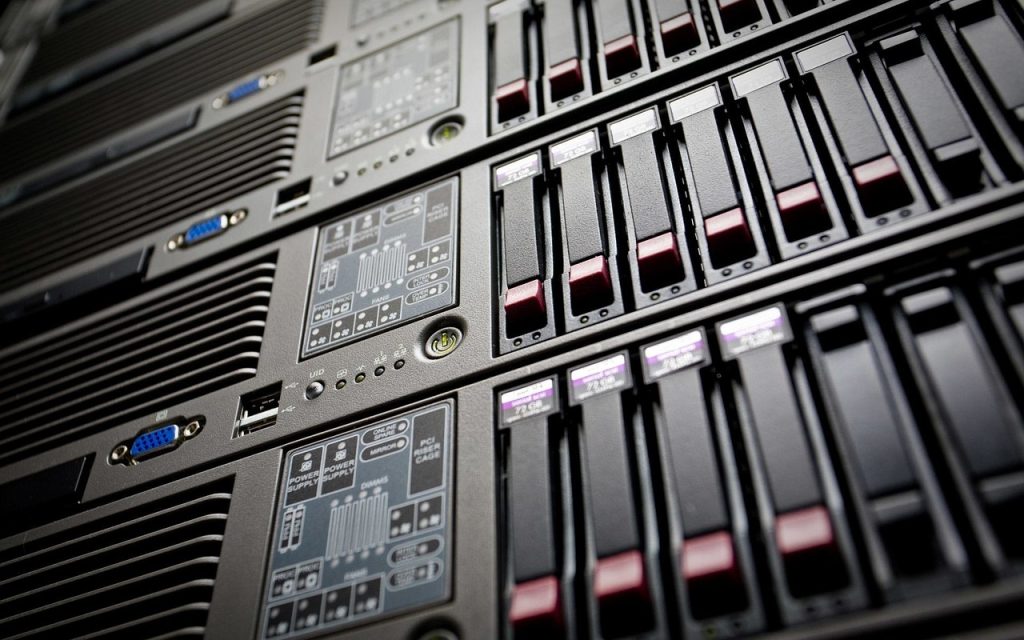
We are thrilled to announce that Coolicehost.com has expanded to a new location in the USA! Our state-of-the-art servers are now live in Hillsboro, Oregon, a prime spot in the heart of the “Silicon Forest.” This move marks a significant milestone in our journey to provide top-tier hosting solutions to our clients, particularly those seeking […]
Redis, also known as Remote Dictionary Server, is a type of database that can write caching to the RAM of the server itself. Unlike traditional caching methods, where it is recorded either on the hard drive itself or in a classic database, Redis is significantly faster because it retrieves the recorded data from the server’s […]
WAF (Web Application Firewall) or web application firewall helps protect web applications by filtering and monitoring HTTP traffic between a web application and the Internet. Typically, a WAF protects web applications from attacks such as cross-site forgery, cross-site contamination, cross-site scripting (XSS), file inclusion, and SQL Injection. WAF is a layer 7 protocol in the […]
What exactly is a CPU? A server’s central processing unit (CPU) is a physical component that houses the main computing unit. Data is transformed into digital signals by servers and other smart devices, which then use those signals to do mathematical operations. The main element that processes the impulses and enables computation is the CPU. […]
Introduction Are you a small to medium business owner concerned about the security of your online business but overwhelmed by technical jargon? You are not alone. Ensuring the security of your online presence and reputation is important, but it doesn’t have to be complicated. This to-do list is designed specifically for non-technical small and medium […]
What does networking’s time-to-live (TTL) mean? The term “time to live” (TTL) describes the number of “hops” that a packet is allowed to stay in a network before a router discards it. TTL is also utilized in other settings, such as DNS and CDN caching. How does TTL work? The understanding of it’s process. There […]
With the help of this useful set of commands, monitor disk consumption. One of the everyday tasks for system administrators (and others) is to monitor disk utilization information. A few built-in tools in Linux assist in providing that information. The df command in Linux The Linux program df, which stands for “disk-free,” displays the amount […]
When it comes to the performance of websites, web administrators and SEOs frequently have two questions that may be answered by internet tools: What is the speed of my website? How can I make my website performs better? Numerous website-monitoring solutions are available to find these issues if there are some. Naturally, purchasing the greatest […]
As site an owner, you are probably wondering what is the most accurate tool to use to measure your site’s performance – how many visitors it has, is it increasing its traffic and popularity, etc. There are different tools that report the data and measure it in different ways. Inspired by a common query, “Why […]